Learn more

Credits: Photograph by Dixiana Salas.
Credits: Photograph by Nicolas Landa.
01
What Is a Surf Ecosystem?
A surf ecosystem is the interconnected natural environment in which surfing takes place, including waves, reefs, beaches, marine life, and coastal communities. It is not just about the waves themselves, but about everything that supports them and is influenced by their presence.
02
What Is the Blue Economy?
The blue economy encompasses all economic activities that depend on the ocean—from fisheries to coastal tourism and marine innovation—while promoting a balance between development and conservation. It reflects the ocean’s potential to generate employment, drive economic growth, and improve quality of life, while safeguarding the health of marine ecosystems.
Credits: Conservation International Peru.
Credits: Photograph by Ryan Chachi Craig.
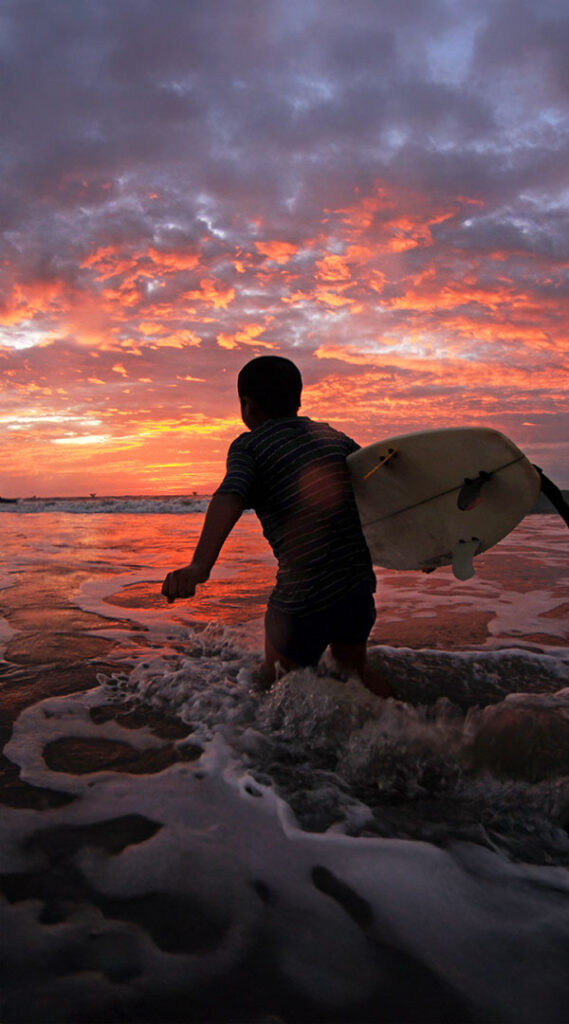
Credits: Photograph by Javier Larrea / SPDA.
03
What Is the Surf Ecosystem and Blue Economy Management Initiative?
The initiative “Expanding the Benefits of the Blue Economy and the Conservation of Critical Biodiversity and Ecosystem Services through the Management of Surf Ecosystems” seeks to promote effective management of marine and coastal ecosystems surrounding surf breaks. Its goal is to ensure the protection of biodiversity and the proper functioning of these ecosystems, while generating blue economy benefits for coastal communities in Costa Rica, Panama, and Peru.
04
Where We Work:
We work in Costa Rica, Peru, and Panama, countries with high-quality surf ecosystems and significant tourism activity linked to surfing. These conditions create opportunities to use surf sites as drivers for marine ecosystem conservation and for generating benefits for local coastal communities. The exchange of experiences among these countries will contribute to advancing the effective management of surf ecosystems across the region.
- Ostional National Wildlife Refuge, Guanacaste:
Renowned for its marine and coastal ecosystems, the refuge—located in Guanacaste, Costa Rica—is especially famous for the massive arribadas of Olive Ridley sea turtles, making it one of the few places in the world where the complete nesting cycle can be observed. It also offers consistent surf waves, creating a unique environment where wildlife conservation and surfing coexist.
- Playa Hermosa–Punta Mala National Wildlife Refuge, Puntarenas: Designated as a World Surfing Reserve in 2020, this refuge features exceptional surf breaks and critical biodiversity, including mangroves and several species of sea turtles such as the Olive Ridley (*Lepidochelys olivacea), It stands as a model of community-based conservation that brings together surfing, sustainable tourism, and environmental protection.
- Huanchaco, La Libertad:
Designated as a World Surfing Reserve in 2013, Huanchaco is a place where surfing converges with the cultural heritage of the Chimú and Moche civilizations, the ancestral practice of fishing using totora reed boats, and the unique ecosystems of totora wetlands. - Illescas National Reserve, Piura:
A protected natural area of high biodiversity (home to Humboldt penguins and a nesting site for the Andean condor), where efforts are underway to lay the foundations for sustainable tourism and the orderly, sustainable practice of surf-related sports.
Recognizing the strategic value of the ocean as a driver of sustainable development, the project works with the Ministry of Environment of Panama to share global and national best-practice guidelines for the protection and management of surf ecosystems and the development of a blue economy.
Para consultas, alianzas o información adicional sobre el proyecto, comunícate con nosotros a: surf@conservation.org